Identify business needs, recommend solutions and understand requirements to enable change. Inquisitive, observing, detail-oriented and questioning. What’s being done and why, rile being made or exceptions? Rules are being followed or should they be adopted to the situations.
Problem, restructuring as opportunities and finding solutions.
International Institute of Business Analysis defines business Analytics as ‘the practise of enabling change kn the context of an enterprise by defining needs and recommending solutions that deliver value to the stakeholders.’
Supporting strategic management by following the changes. Application of knowledge, skills, tools and techniques to determine problems and identify business needs. Identify and recommend viable solutions for meeting those needs. Manage stakeholders requirements in order to meet business and project objectives.
Role depends on:
Size, maturity, sector, life cycle approach and methodology of project. Understand the basic needs, overall strategic objectives, goals of the objectives and helping achieve these goals. Role depends on the situation. Current product is enhanced or new product is developed. Skills needed to understand the needs of the customer. BA has to explain the solutions, why and what is involved changes to ongoing operations, continuous improvement needed for a project or a program.
Analytical skills: define problems and opportunities, overall strategy of the organisation, why projects were selected, change agent. Change is inevitable but it is hard. It is change from current state from desirable future. Organisational culture and political environment. Extract relevant from the trivial, creative and critical thinking, system, learning skills and problem solving, communicate in multiple ways to multiple people. Communicate 70-80% as collaborating, active listening, non verbal behaviour, writing skills, meaning conversations, work with others in a leadership role, visual and presentation, facilitation. Problem, solutions and rational thinking to the organisation leaders. With data communicate with the leaders. The role requires to operate between and within departments. Natural inquisitiveness leads to analysis and solutions.
Draft a situation statement and the impact on the organisation. What’s the current problem to be solved and opportunity to be taken in a structured manner. The opportunity /threat has an impact on the organisation in a particular way.
Situation 1: the existing process for processing returns involves a need to submit paper work duplicating the digital record. The result is significant delays as extra labor cost. The resulting impact is that additional staff is hired to meet established quota.
Ishikawa diagram for documenting the root cause analysis, 5 whys, where problems might exist, modifications to current process. Solution is developed to deliver measures business value.
Is solution technical feasible, time requirements and cost. We don’t want to provide 1 solution but alternate so stakeholder can select one with maximum chances.
Dust would land up on solar panels due to construction. Who are the stakeholders (impact a decision/outcome of a project, special knowledge of current solution, will use/support the current system).
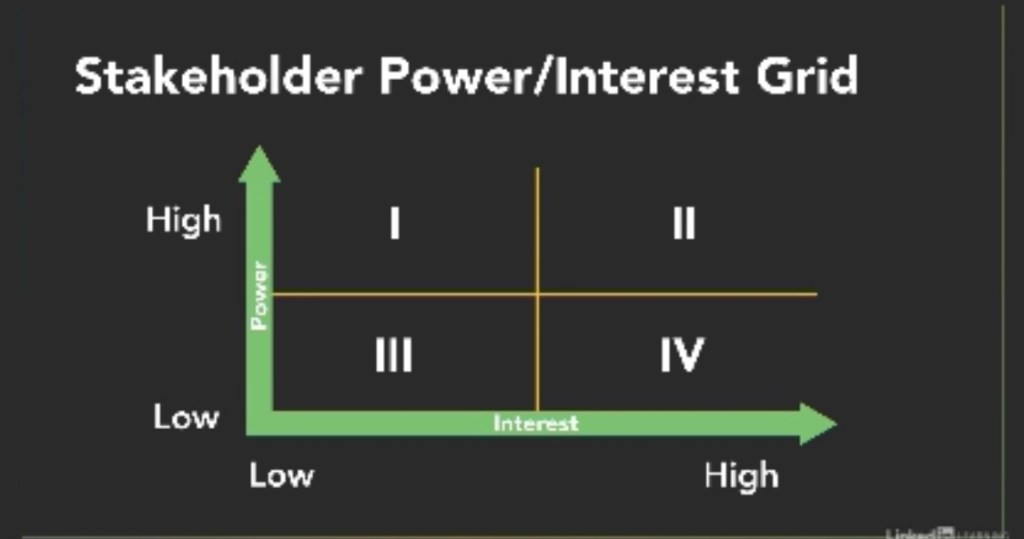
Low power, high interest these work on the problem statement but can’t make changes. High power people want to know just the recommendation. High power, high interest can suggest changes with changes.
Engage them in the development of the project. Understand the necessity of change. Working with stakeholders = engagement
Find out most effective ways of engaging with the stakeholders. Setting of goals, objectives, scope boundaries.
Most effective way of communicating with stakeholders. Reserve time to work with the stakeholders.
 Data Centric